RBI Grade B vs NABARD Grade A: Which Banking Job Should You Go For?
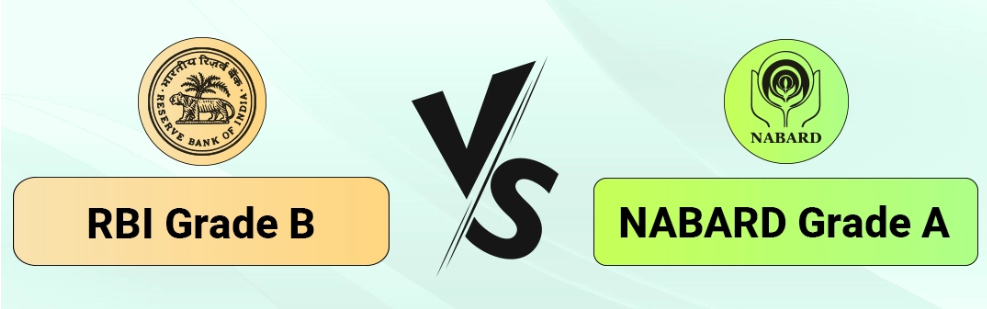
Every year, the RBI Grade B notification and the NABARD Grade A notification are released around the same time, and people always start asking: NABARD Grade A or RBI Grade B? Which one is better?
To the casual observer, both would look identical. Government jobs. Power. Respect. Good salary.
So people lazily ask: "Which one is better?"
That question is useless. The real question is: Which one looks better on you, five, 10, 20 years from now?
This article answers that.
Institutional Difference Comes First (Not Salary)
Before attempting any comparisons of exams, we must understand the nature and features of both institutions.
Reserve Bank of India (RBI)
The Reserve Bank of India is the supreme monetary authority in India. It is responsible for:
- Formulation and implementation of monetary policy
- Regulating and supervising banking
- Controlling inflation trends
- Managing foreign exchange operations
- Ensuring financial market stability
- Safeguarding payment systems
- Acting as banker to banks
NABARD
National Bank for Agriculture and Rural Development is a development bank with the mandate of promoting rural development. Its main objectives:
- Promote rural credit
- Support agricultural development
- Supervise cooperative banks
- Enable Self-Help Groups (SHGs)
- Develop rural infrastructure
- Improve quality of life in rural India
Job Role: Policy vs Development
RBI Grade B Job Profile
Work Areas:
- Monetary Policy Department
- Banking Regulation and Supervision
- Financial Markets
- Economic Research
- Currency Management
- Payment and Settlement Systems
- International Relations
Your work is:
Policy-oriented Desk-heavy Research-driven Macro-levelYou will be setting the tone for how the banking and financial system as a whole is going to behave.
NABARD Grade A Job Profile
Responsibilities:
- Rural Credit
- Cooperative Bank Supervision
- Agriculture Infrastructure
- SHG and Microfinance
- Development Projects
- State-level rural finance
Your work is:
Development-oriented Field + desk mixed Implementation-heavy Micro to mid-level impactIt is you who controls whether credit reaches villages and farmers.
Neither is superior. They are just different worlds.
Work Location and Lifestyle Reality
Here is where lots of people take interest.
RBI Grade B Lifestyle
- Major metros and big cities
- Mumbai dominates postings
- Structured office hours
- Minimal field work
- Strong urban exposure
Your life is corporate, but sovereign.
NABARD Grade A Lifestyle
- State capitals
- District-level exposure
- Regular field visits
- Encounters with banks, NGOs, and state governments
Your life feels closer to administration and development work.
If you hate travel and rural exposure, NABARD will test your patience. If you hate desk-bound policy files, RBI will bore you slowly.
Salary Comparison: RBI Grade B vs NABARD Grade A
RBI Grade B Salary
One of the highest-paid government jobs
- Strong basic pay + allowances
- Urban compensation benefits
- Excellent long-term perks
RBI Grade B salary increases silently yet powerfully.
NABARD Grade A Salary
A little less than RBI Grade B
- Still among top government salaries
- Good allowances
- Comfortable lifestyle across India
The discrepancy is present but not life-defining.
Picking on salary alone is for amateurs.
Career Growth and Exposure
RBI Grade B Growth
- Exposure to global central banking
- International training programs
- IMF, World Bank interactions
- Policy drafting and macro decisions
RBI officers, with the passage of time, turn into system thinkers.
NABARD Grade A Growth
- Deep understanding of rural finance
- Policy + implementation exposure
- State and central coordination
- Development finance expertise
NABARD officers emerge as reformers at the grass-roots over time.
Different trajectories. Different satisfaction.
Exam Pattern and Preparation Reality
RBI Grade B Exam
- Highly competitive
- Strong focus on:
- Economics
- Finance
- Current affairs
- Writing skills
This test is for thinkers, not crammers.
NABARD Grade A Exam
- Specialized streams
- Agriculture and rural development weightage
- ESI focus
- More syllabus diversity
In NABARD Grade A 2026, anticipate:
- Domain-heavy preparation
- Consistency over quick study
- Long-term syllabus discipline
Neither exam is easy. RBI is intellectually brutal. NABARD is syllabus-heavy.
Transfers and Long-Term Stability
RBI has limited transfers and high posting stability.
NABARD involves more movement across states and regions.
If you value geographic stability, RBI wins. If you enjoy varied exposure, NABARD delivers.
Who is the Right Candidate for RBI Grade B?
RBI Grade B is for you if:
- You enjoy economics and finance
- You like policy thinking
- You want global exposure
- You prefer structured urban work
- You follow each RBI Grade B notification religiously
Who Should Opt For NABARD Grade A?
NABARD Grade A is for you if:
- You care about rural India
- You enjoy a blend of field and desk work
- You enjoy development finance
- You are preparing by keeping in mind the NABARD Grade A 2026
- You want a visible grassroots impact
The Final Answer
There is no "better" job.
There is only:
- ✓ A career that fits your personality
- ✓ Or a job that slowly sucks the life out of you
What are the common perks in RBI Grade B and NABARD Grade A?
- Authority • Stability • Respect • Long-term growth
Choose the place that aligns with how you think, not what sounds impressive in your WhatsApp group.
And that decision will still matter long after the exam has finished.